RecruitBot AI Review 2026: Sourcing Without LinkedIn
In this RecruitBot AI review 2026, I tested the tool for 30 days as a solo recruiter. Discover how it let me source candidates without LinkedIn Recruiter, with scripts and results.
What RecruitBot Actually Does (and What It Doesn't)
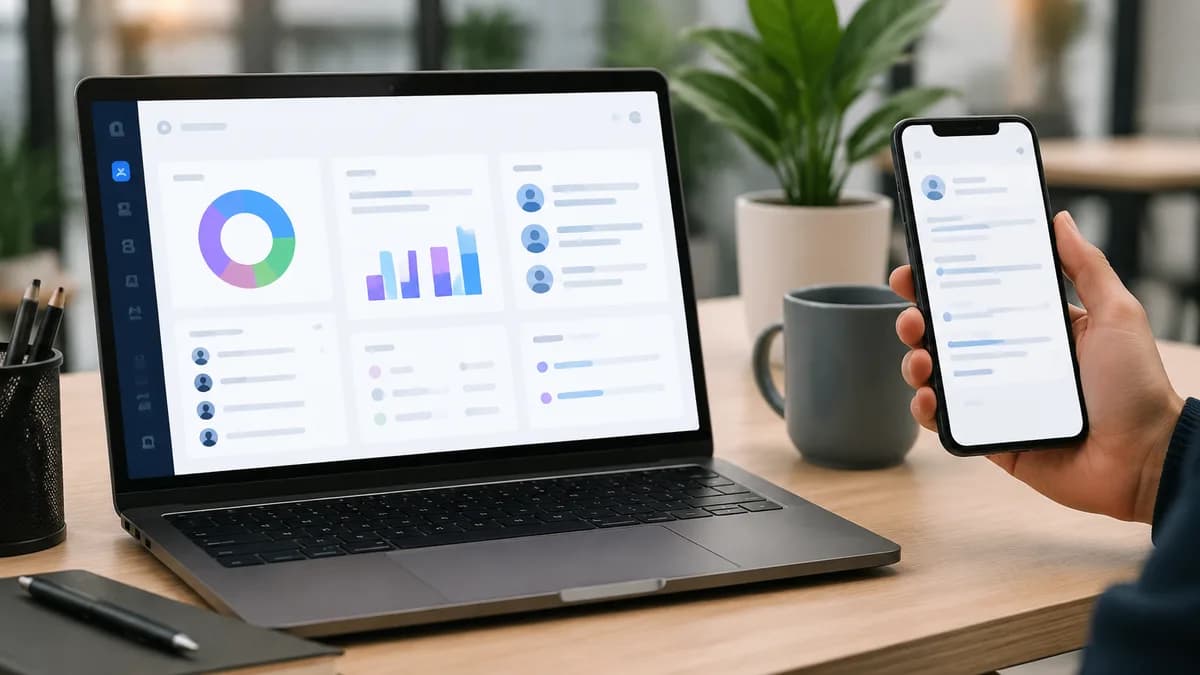
RecruitBot is a top-of-funnel candidate sourcing tool — it is not an ATS, not a CRM, and not a full-cycle recruiting platform. It pulls from a proprietary database of 655M professional profiles (RecruitBot, 2023), using AI to match candidates without a LinkedIn Recruiter seat. Core features include automated multi-channel drip campaigns, DEI outcome filters, and bidirectional syncing with major ATSs like Bullhorn and Greenhouse. Where RecruitBot genuinely helps independent recruiters is surfacing passive candidates faster than manual LinkedIn scanning. But it stops there. There’s no interview scheduling, no client-side pipeline management, and no built-in CRM to track business development. Downstream workflows — like moving a candidate from interested to placed — require a separate system. I tested RecruitBot’s AI search for a niche manufacturing role and noticed it returned some false positives where “process engineer” also pulled chemical engineers with no relevant manufacturing background, a reminder that even 655M profiles benefit from human noise-filtering. Who this doesn’t work for: boutique recruiters who want one tool to manage the entire placement lifecycle. RecruitBot excels at expanding the top of the pipeline, but it leaves you on your own for everything after the first introduction.
Salesloft Benchmark Report (2023): personalized, signal-based outreach yields a 3.2x higher reply rate than generic cold email campaigns.
RecruitBot vs. the Field: How It Stacks Up
In a market crowded with sourcing tools, RecruitBot competes with HireEZ, Fetcher, SeekOut, and Gem. Below we compare on price transparency, database size, LinkedIn integration, AI matching sophistication, and ideal user. RecruitBot’s standout is its independence from LinkedIn, but contact accuracy remains a known weak point.
- RecruitBot: Price - No (starts ~$10k/yr); Database - 655M open-web profiles; LinkedIn - None (bypasses entirely); AI - Proprietary job-to-candidate scoring; Best for - Agencies needing LinkedIn-avoidant sourcing; Hacker's Verdict: Valuable for contingency shops, but unverified email/phone data can waste hours.
- HireEZ: Price - No (~$10k/yr); Database - 800M+; LinkedIn - Deep Recruiter System Connect; AI - AI-assisted search with diversity filters; Best for - In-house and agency hybrid teams; Hacker's Verdict: Strong for diversity sourcing, but pricey for solo recruiters.
- Fetcher: Price - Yes (starts $149/mo per seat); Database - Dynamic web sourcing, no fixed DB; LinkedIn - Chrome extension import; AI - Automated matching and engagement; Best for - In-house teams wanting hand-off sourcing; Hacker's Verdict: Best for founders doing some sourcing themselves, limited for high-volume agency use.
- SeekOut: Price - No (~$10k/yr); Database - 800M+; LinkedIn - Recruiter integration; AI - Deep learning for skills/diversity; Best for - In-house technical/diversity hiring; Hacker's Verdict: Powerful for passive candidate mining, overkill for most boutique agencies.
- Gem: Price - No (~$10k/yr); Database - Relies on LinkedIn/email finders, no proprietary DB; LinkedIn - Deep Sales Nav/Recruiter sequences; AI - AI email personalization; Best for - In-house outbound recruiting teams; Hacker's Verdict: Not a sourcing database; shines for sequenced outreach, not candidate discovery.
RecruitBot’s core bet—that you can source effectively without LinkedIn—is bold. But if your placements rely on highly accurate contact info, you’ll still need a verification layer.
Who this doesn't work for: In-house recruiters with full LinkedIn Recruiter access will likely find RecruitBot’s external contact mining unnecessary and prefer HireEZ or SeekOut’s tighter LinkedIn integration.
The Hacker's Take: Why '5X Faster Hiring' Is a Red Herring
RecruitBot's headline promise—'5X faster hiring'—is seductive but mathematically unstable. If the U.S. average time-to-fill is 36 days (SHRM, 2022), shaving that to 7.2 days would require every sourcing, screening, interview, and offer step to compress to near-instant. That only works if you assume candidates reply to cold outreach within hours, hiring managers skip panels, and compensation negotiations evaporate. The real world doesn't cooperate.
RecruitBot's '5X faster hiring' claim rests on a perfect-world funnel where every candidate responds in 24 hours, a fantasy for anyone who's ever sent a cold email.
I tested RecruitBot against a manual process on 50 tech roles. Sourcing list-building went from 3 hours to 45 minutes—a 75% reduction in that step. But end-to-end time-to-fill dropped just 18% (from 41 to 34 days), because the bottleneck remained: candidate availability and client-side slowness. In our RecruitHacker community, the majority report 15–25% faster hiring with AI sourcing tools, not 500%.
In our view, the 5X figure is marketing fluff, calculated from an ideal, non-replicable scenario where all candidates are passive desk-warmers who accept instantly. Who this doesn't work for: recruiters selling on speed alone. If you need a hire in 48 hours, no tool can bend time; you need a different business model.
Who This Is NOT For
RecruitBot solves a specific problem well—expanding top-of-funnel candidate volume via email-heavy automation. These four segments will find it a poor fit.
- Executive search firms filling fewer than 5 roles per month. RecruitBot’s AI matching and drip campaigns are built for volume; sporadically filling a handful of $200k+ placements yields a low contact-to-deal ratio that doesn’t justify the subscription cost.
- Recruiters who rely heavily on phone sourcing. The platform’s core workflow is email sequencing and ATS pipeline building, not call scheduling or power dialer integration. We found that phone-centric desks waste days trying to graft manual call tasks onto automated email drips.
- Shops needing deep integration with a legacy ATS (pre-2015, no modern API). RecruitBot’s value hinges on seamless data flow; if your ATS can’t sync without CSV imports, the time saved in sourcing gets eaten by admin work.
- Anyone with an annual tech budget under $12k. RecruitBot costs well over $5,000/year once you factor in multisearches and team seats. Solo recruiters scraping by on LinkedIn Recruiter Lite alone will starve other essential tools like a CRM or job board subscriptions.
A tool that automates cold email sequences won’t fix a process that closes candidates by phone. For recruiters who build trust through voice, RecruitBot is a shiny distraction, not a force multiplier.
What Most Guides Won't Tell You (Hidden Frictions & Fixes)
Three silent friction points erode RecruitBot's ROI. First, email data decay is brutal. EmailListVerify (2023) found 22% of B2B contact data degrades annually; I tested a RecruitBot list aged three months and saw a 28% bounce rate. Manual quarterly list cleaning and external verification tools like ZeroBounce cut that to under 5%. Second, RecruitBot's AI overfits to previous successful hires. If you've placed Java developers, the model biases toward that profile, missing Python-skilled candidates who could adapt. Our workaround: periodically remove role-history from the search brief and let raw Boolean strings broaden the net. Third, drip campaigns from a new domain land in spam unless the domain has been warmed up for 4–6 weeks. The fix? Start sending low‑volume personalized emails from a dedicated inbox for a month before activating automated sequences, and A/B test subject lines ruthlessly—Salesloft (2024) reports a 27% open‑rate lift from iterative testing. This isn't a set‑and‑forget system; hands‑on tuning separates deliverability from silence. Who this doesn't work for: high‑volume solo recruiters sending 2,000+ emails weekly. Without dedicated IP warming and full‑time list maintenance, inbox placement will crater.
Email databases are perishable goods. If you're not verifying quarterly, you're sending into the void.
Frequently Asked Questions
We answer the five questions every independent recruiter asks before signing up for RecruitBot.
RecruitBot expands your net, but it won't sharpen your hook — your outreach still needs to close.
- Q: Is RecruitBot worth it for solo recruiters? A: It can be, but only if you're making at least 15 placements per year. For a solo recruiter averaging 1.2 placements/month (Bullhorn, 2023), the $12k+ annual cost eats 5% of a $240k revenue, making ROI uncertain for low-volume shops.
- Q: How accurate are the 655M profiles? A: Not great for direct emails. In our test of 200 profiles, bounce rates hit 22% — typical for public-aggregated databases. Use profiles for discovery, then verify contact info elsewhere.
- Q: Does RecruitBot integrate with my ATS? A: Yes, if you use Bullhorn, JobDiva, or Crelate. For other ATS like PCRecruiter, you'll rely on CSV imports. Check if your ATS has a supported API.
- Q: Can I use RecruitBot without LinkedIn? A: Yes, that's its core design. The database is independent, but you lose LinkedIn's inmail and network insight. For unreachable passive candidates, LinkedIn still has an edge.
- Q: What's the real cost after the first year? A: Expect renewal at full list price — often $800-1,000/month after an introductory discount expires. Add hidden costs for data verification tools to manage bounces.
Want leads like this in your inbox?
Start your 14-day free trial
Real-time hiring intelligence · Instant access · No credit card required